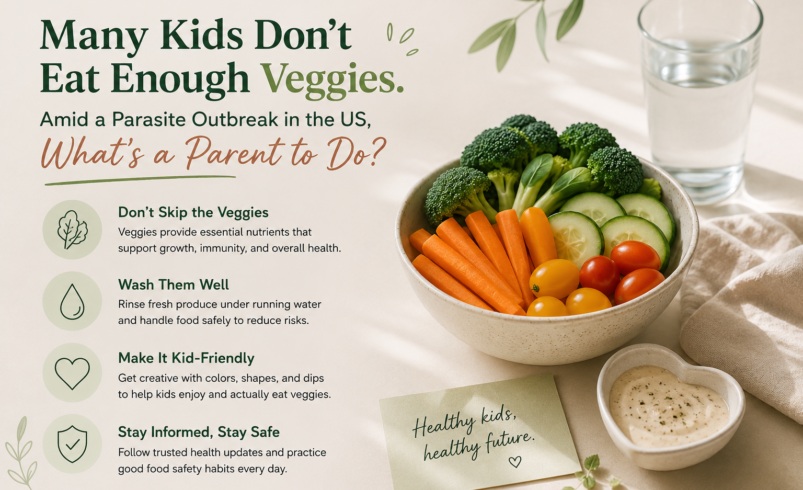
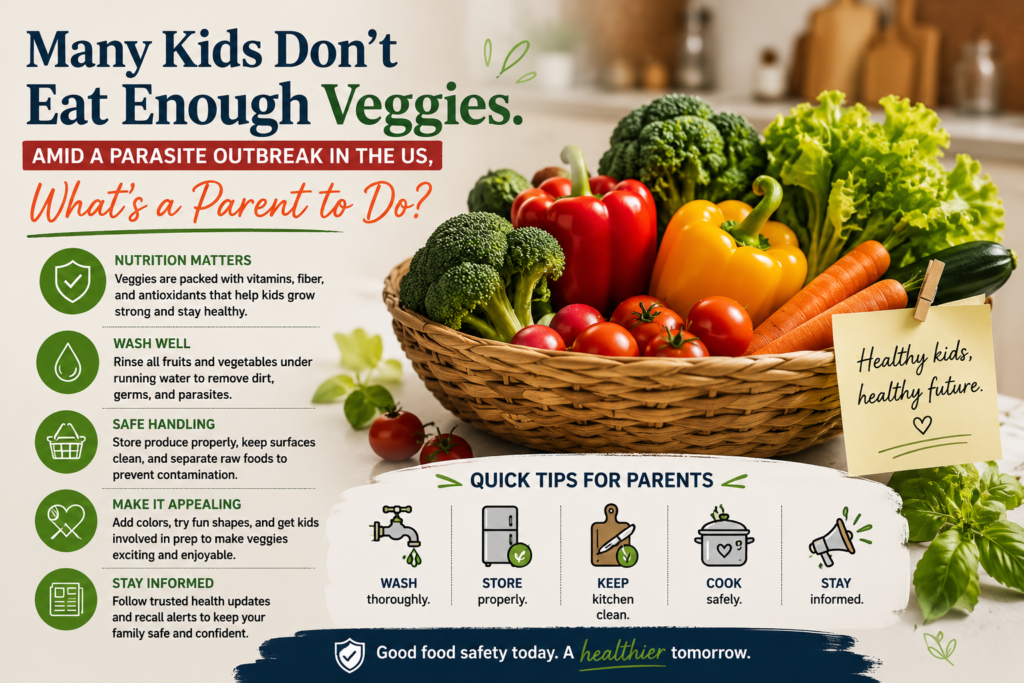
Parents have long struggled to convince children to eat more vegetables, but recent concerns over a parasite outbreak in the United States have made healthy eating and food safety even more important. While fresh fruits and vegetables remain essential for children’s growth, immunity, and overall health, news of foodborne parasites can understandably leave families wondering whether they should change their grocery habits. Health experts emphasize that parents should not stop serving vegetables. Instead, they should focus on buying produce from trusted sources, washing it thoroughly under running water, peeling certain fruits and vegetables when appropriate, and following proper food handling practices. Parasites that contaminate fresh produce are relatively uncommon, but outbreaks can occur when food becomes contaminated during farming, processing, or transportation. Children are particularly vulnerable because their immune systems are still developing, making prevention through safe food preparation especially important.
Vegetables provide essential nutrients such as vitamins A, C, and K, along with fiber, antioxidants, and minerals that support healthy growth, digestion, and immune function. Unfortunately, many children consume far fewer vegetables than recommended, often preferring processed snacks, sugary drinks, or fast food instead. Eliminating vegetables from a child’s diet due to fear of contamination could result in nutritional deficiencies that may have long-term health consequences. Instead, experts encourage parents to make vegetables more appealing by offering colorful options, involving children in meal preparation, serving vegetables with healthy dips, blending them into soups or smoothies, and introducing new varieties gradually rather than forcing large portions.
Food safety starts before vegetables reach the dinner table. Parents should inspect produce for damage, store it at appropriate temperatures, separate raw foods from ready-to-eat items, and wash hands thoroughly before preparing meals. Leafy greens deserve extra attention because dirt and contaminants can become trapped between the leaves. Rinsing each leaf individually under clean running water can significantly reduce potential contamination. Although some people use vinegar or commercial produce washes, public health authorities generally recommend that clean running water is sufficient for most fresh produce. Cooking vegetables, when appropriate, can also reduce the risk of certain pathogens while still preserving many important nutrients.
The recent parasite outbreak also serves as a reminder that food safety involves more than vegetables alone. Raw meats, unpasteurized dairy products, contaminated water, and poor kitchen hygiene can all contribute to foodborne illnesses. Parents should ensure that meat is cooked to safe internal temperatures, kitchen surfaces are cleaned regularly, cutting boards are separated for raw meats and produce, and refrigerated foods are stored properly. Teaching children basic hygiene habits, such as washing their hands before eating and after using the restroom, provides another important layer of protection against many types of infections.
Parents should also remain informed without becoming overwhelmed by alarming headlines. Most food recalls and outbreak investigations are quickly identified by public health agencies, which provide clear guidance about affected products and locations. Following official health updates allows families to make informed decisions without unnecessarily removing healthy foods from their diets. If a recalled product is identified in the home, it should be discarded immediately according to official recommendations, and any surfaces or containers that came into contact with it should be cleaned thoroughly.
Ultimately, maintaining a balanced diet while practicing proper food safety remains the best strategy for protecting children during any foodborne illness outbreak. Vegetables continue to play a vital role in supporting healthy development, reducing the risk of chronic diseases later in life, and strengthening the immune system. Rather than avoiding fresh produce altogether, parents can reduce risk by purchasing quality products, preparing them safely, staying informed about recalls, and encouraging healthy eating habits from an early age. By combining good nutrition with sensible food safety practices, families can continue enjoying the benefits of vegetables while minimizing the risk of foodborne parasites and other illnesses.