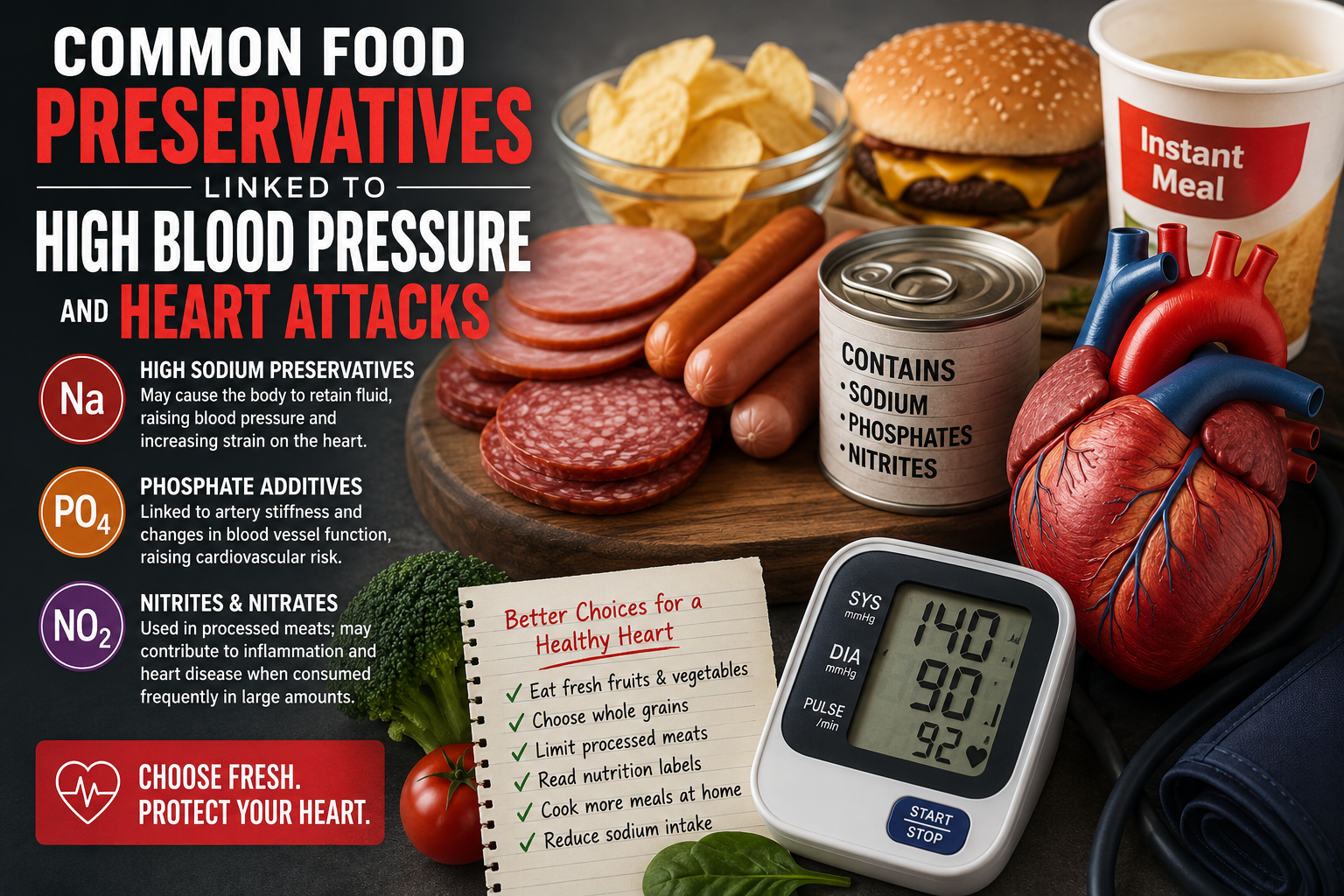
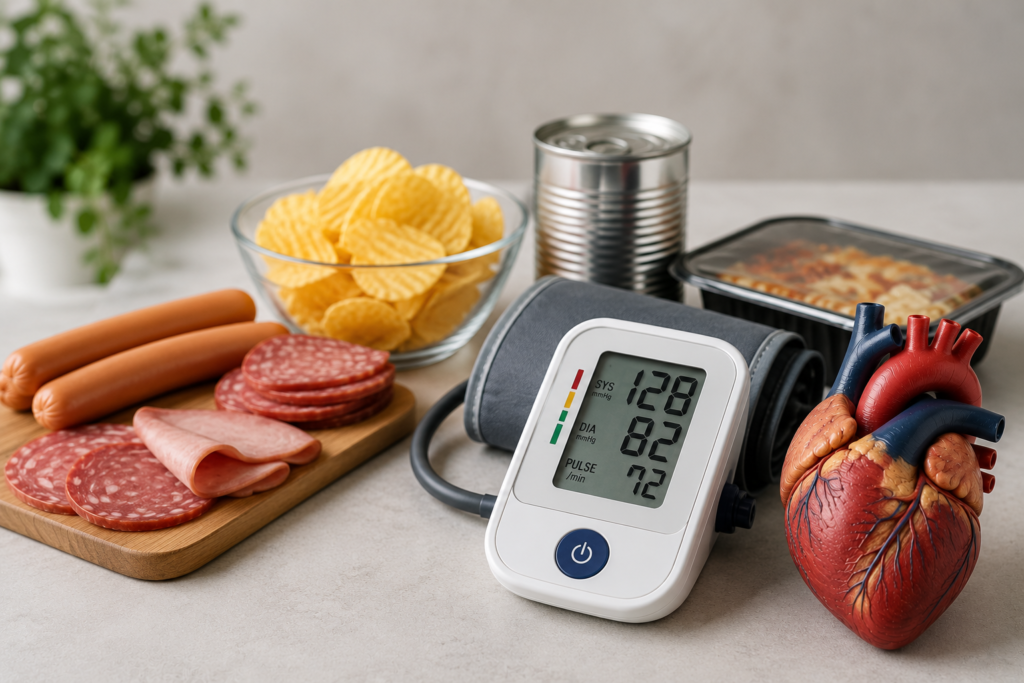
A growing body of research is raising new concerns about the long-term health effects of common food preservatives found in many processed foods. Scientists are investigating whether certain preservatives, particularly phosphates, sodium-based preservatives, and nitrites, may contribute to an increased risk of high blood pressure, heart disease, and heart attacks when consumed regularly in large amounts. These additives are widely used to extend shelf life, improve texture, and enhance flavor in products such as processed meats, frozen meals, packaged snacks, fast food, and ready-to-eat meals. While food safety authorities approve these preservatives at regulated levels, researchers suggest that diets high in ultra-processed foods may expose people to greater cumulative amounts over time. Excess sodium from preservatives can raise blood pressure by causing the body to retain more fluid, placing additional strain on the heart and blood vessels. Some phosphate additives have also been linked to stiffening of the arteries and changes in blood vessel function, especially in individuals with kidney disease or existing cardiovascular conditions. Health experts emphasize that the greatest concern is not an occasional packaged meal but a consistent eating pattern centered on heavily processed foods. The findings reinforce long-standing advice to prioritize fresh fruits, vegetables, whole grains, lean proteins, nuts, legumes, and minimally processed foods while carefully reading nutrition labels for sodium and preservative content. Cooking more meals at home, reducing processed meat consumption, and choosing lower-sodium alternatives can significantly support heart health. Although more research is needed to establish direct cause-and-effect relationships for some preservatives, the evidence continues to highlight the importance of limiting processed food intake as part of a heart-healthy lifestyle. By making informed dietary choices today, individuals can lower their risk of high blood pressure, reduce stress on the cardiovascular system, and improve their chances of maintaining long-term heart health.