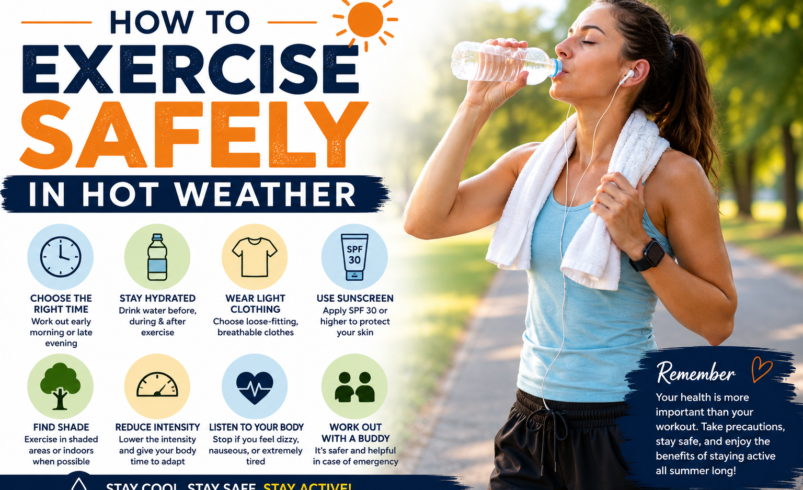
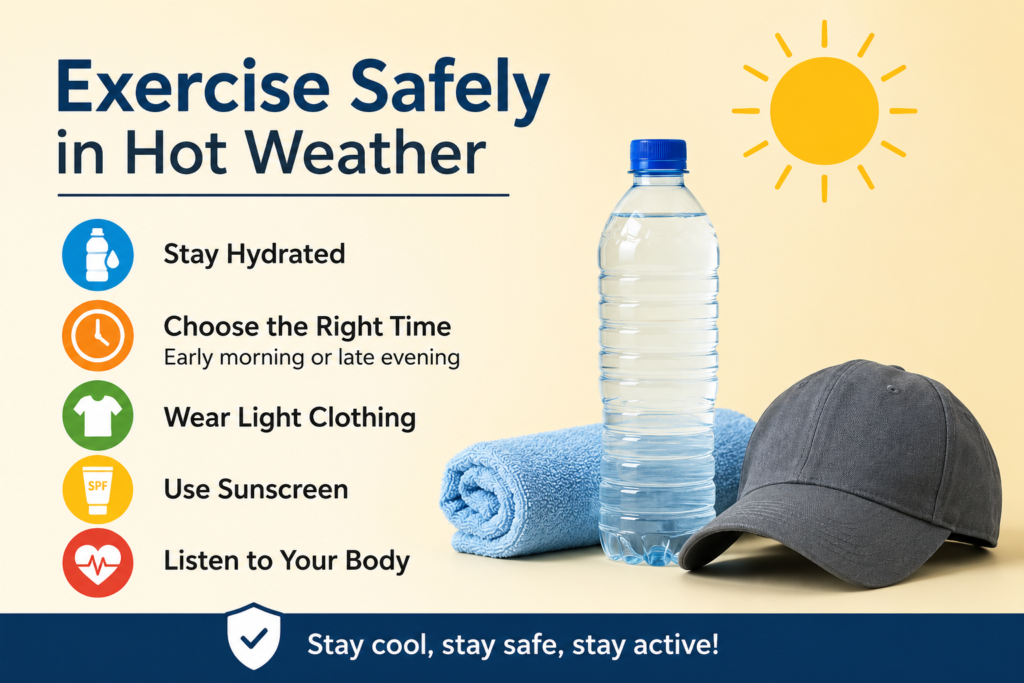
Exercising outdoors during hot weather can be an excellent way to stay active, but it also comes with serious health risks if proper precautions are not taken. High temperatures combined with humidity make it harder for your body to cool itself, increasing the risk of dehydration, heat exhaustion, and heat stroke. To exercise safely, start by choosing the coolest times of the day, such as early morning or late evening, when the sun is less intense. Wear lightweight, loose-fitting, and moisture-wicking clothing in light colors to help your body stay cool, and always apply a broad-spectrum sunscreen with at least SPF 30 to protect your skin from harmful UV rays. Staying hydrated is one of the most important steps—drink water before, during, and after your workout, even if you don’t feel thirsty. For longer or more intense sessions, consider beverages with electrolytes to replace minerals lost through sweat. Reduce the intensity of your workout when temperatures are high, allowing your body time to adapt instead of pushing yourself to achieve personal records. Listen carefully to your body’s warning signs, including dizziness, headache, excessive fatigue, muscle cramps, nausea, or confusion, and stop exercising immediately if these symptoms appear. Whenever possible, choose shaded trails, parks, or indoor gyms with air conditioning instead of exercising in direct sunlight. Beginners, older adults, children, and individuals with heart conditions or chronic illnesses should be especially cautious, as they are more vulnerable to heat-related illnesses. It’s also wise to avoid heavy meals, alcohol, and excessive caffeine before exercising since they can contribute to dehydration. If you exercise with a friend, you can monitor each other for signs of heat stress and respond quickly in an emergency. Remember that fitness progress comes from consistency rather than intensity, and adjusting your routine during extreme heat is a smart decision that protects your health while allowing you to remain active throughout the summer months. By following these simple yet effective safety strategies, you can enjoy outdoor workouts while minimizing the risks associated with exercising in hot weather.