


July 29, 2026
Finance

ETF vs. Stock Investing Explained: Which Is the Better Choice in 2026?

  • July 11, 2026
  • 0

Discover the key differences between ETFs and individual stocks, including risk, diversification, costs, and potential returns. Learn which investment strategy is best for beginners and long-term investors in
ETF vs. Stock Investing Explained: Which Is the Better Choice in 2026?

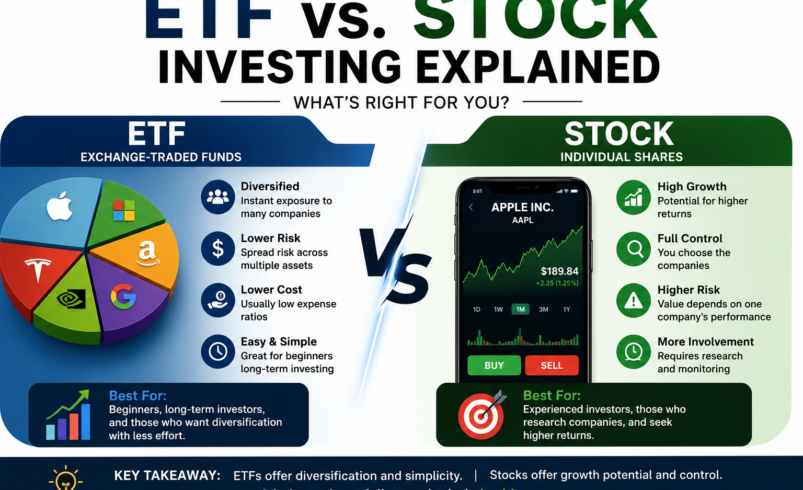
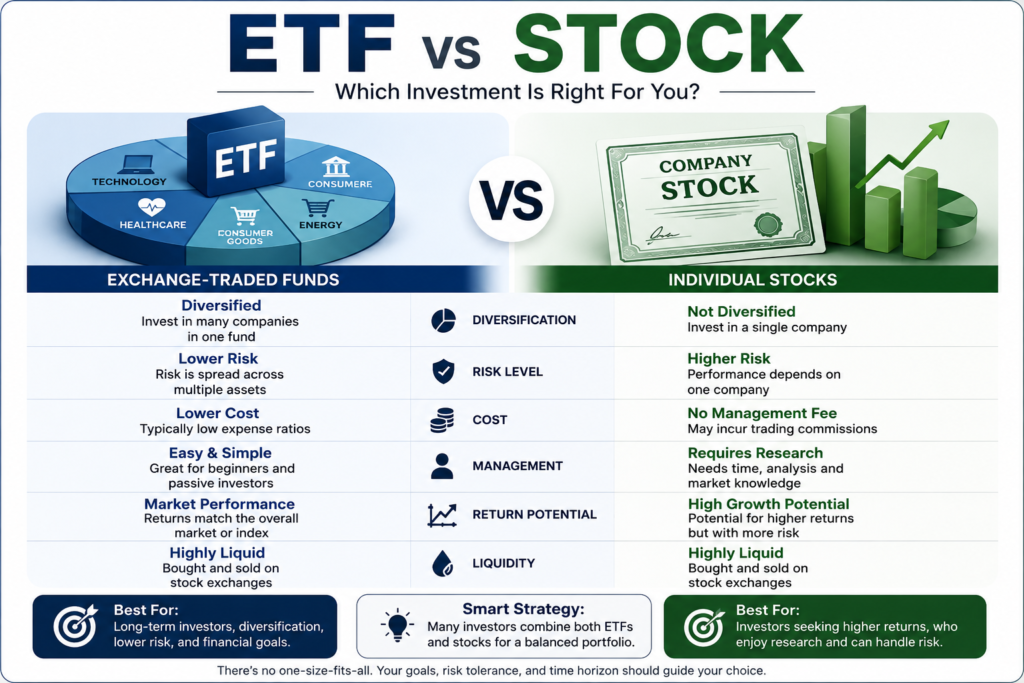
When it comes to building wealth, one of the biggest questions new investors face is whether to invest in Exchange-Traded Funds (ETFs) or individual stocks. While both options offer the opportunity to grow your money over time, they serve different purposes and come with different levels of risk. An ETF is a collection of investments—such as stocks, bonds, or other assets—packaged into a single fund that trades on a stock exchange just like a regular stock. This means that by purchasing one ETF, you can instantly own small portions of dozens or even hundreds of companies, providing built-in diversification. Because your investment is spread across multiple businesses, ETFs generally reduce the impact of poor performance from any single company, making them a popular choice for beginners and long-term investors.Individual stocks, on the other hand, represent ownership in a single company. Buying shares of a company like Apple, Microsoft, or Amazon allows investors to benefit directly from that company’s success. If the business performs well, stock prices may increase significantly, potentially delivering higher returns than a diversified ETF. However, investing in individual stocks also carries greater risk because your investment depends entirely on the performance of one company. A disappointing earnings report, management issues, or unexpected market events can cause a stock’s value to fall quickly.Another important difference is the amount of research required. Successful stock investing often involves analyzing financial statements, earnings reports, industry trends, competition, and future growth potential. Investors should also stay informed about economic conditions that may affect specific industries. ETFs require much less ongoing research because professional fund managers or index providers handle the selection of holdings. This makes ETFs an attractive option for people who want a more hands-off approach to investing.

Costs are another factor to consider. Most ETFs charge a small annual expense ratio, which covers fund management and administration. 

 Individual stocks do not have management fees, although investors may still pay brokerage commissions or trading costs depending on their investment platform.

For long-term wealth building, many financial experts recommend starting with broad-market ETFs because they offer diversification, lower risk, and steady growth potential. Investors who enjoy researching companies and are comfortable with higher risk may choose to add carefully selected individual stocks to their portfolios in pursuit of greater returns. In fact, many experienced investors combine both strategies by using ETFs as the foundation of their portfolio while investing a smaller portion in individual stocks with strong growth potential.Ultimately, there is no one-size-fits-all answer. The right choice depends on your financial goals, risk tolerance, investment knowledge, and time horizon. If you’re looking for a simple, diversified investment that requires minimal maintenance, ETFs are an excellent option. If you’re willing to spend time researching companies and can handle market volatility, individual stocks may provide greater opportunities for higher returns. Understanding the strengths and limitations of each investment type can help you make smarter financial decisions and build a portfolio that supports your long-term financial success.

.

Final Thoughts

Choosing between ETFs and individual stocks isn’t about finding a single “best” investment—it’s about selecting the approach that aligns with your financial goals, risk tolerance, and investing style. ETFs offer broad diversification and a simple way to build long-term wealth, while individual stocks provide the opportunity for higher returns with greater risk. Many successful investors combine both strategies to create a balanced portfolio that supports steady growth while taking advantage of individual investment opportunities. By staying informed, investing consistently, and maintaining a long-term perspective, you can make smarter financial decisions and build a stronger financial future.

Leave a Reply

Your email address will not be published. Required fields are marked *