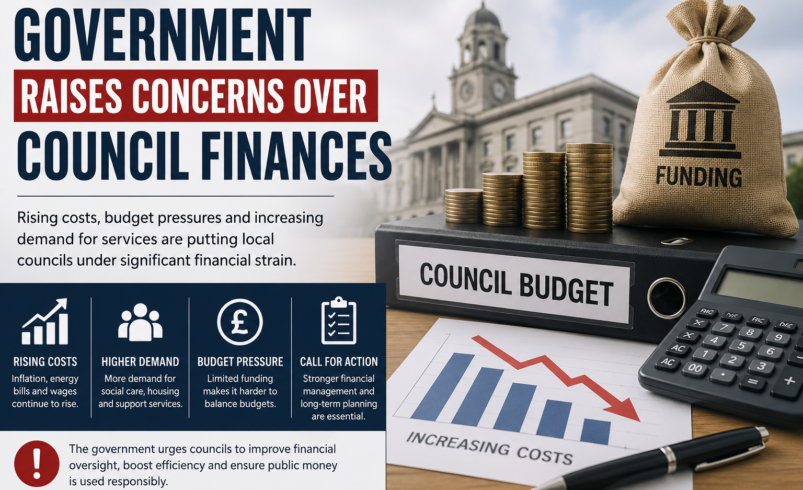
The government has raised significant concerns about the financial condition of several local councils as economic pressures continue to challenge the ability of local authorities to deliver essential public services. Across the country, councils are experiencing increasing financial strain due to rising inflation, higher employee wages, growing energy costs, expanding demand for social care, and limited funding available to meet these obligations. Local governments are responsible for providing many of the services that citizens rely on every day, including road maintenance, waste collection, public transportation support, libraries, housing assistance, education services, environmental protection, emergency planning, community development, and adult and children’s social care. As operational costs continue to increase, many councils are finding it increasingly difficult to balance their budgets while maintaining the quality and availability of these vital services. Government officials have warned that without stronger financial management, improved long-term planning, and sustainable funding arrangements, some councils could face deeper financial challenges that may threaten their ability to operate effectively.
Why Council Finances Are Under Pressure
Several economic and structural factors have contributed to the growing financial difficulties facing local authorities. Inflation has significantly increased the cost of purchasing goods, maintaining public infrastructure, paying utility bills, and delivering everyday services. At the same time, councils have seen rising demand for social care, homelessness support, temporary accommodation, mental health services, and child protection programs. These essential services consume a large portion of council budgets, leaving less funding available for other community projects and local improvements. In addition, many local governments continue to recover from the long-term financial effects of previous economic downturns, while facing new challenges brought by population growth, aging communities, and increased public expectations. These combined pressures have created a difficult financial environment where many councils must carefully prioritize spending while ensuring legal responsibilities continue to be met.
Government Calls for Stronger Financial Management
In response to these growing concerns, government officials are urging councils to strengthen financial oversight, improve accountability, and develop more effective long-term budget strategies. Authorities are encouraging local governments to carry out detailed financial reviews, monitor spending more closely, identify areas where efficiency can be improved, and introduce modern financial management systems that reduce unnecessary costs. Independent audits, transparent reporting, and regular performance assessments are also being recommended to help detect financial risks before they become serious problems. The government believes that early intervention, responsible leadership, and careful financial planning can help councils avoid severe financial crises while protecting essential public services for local residents.