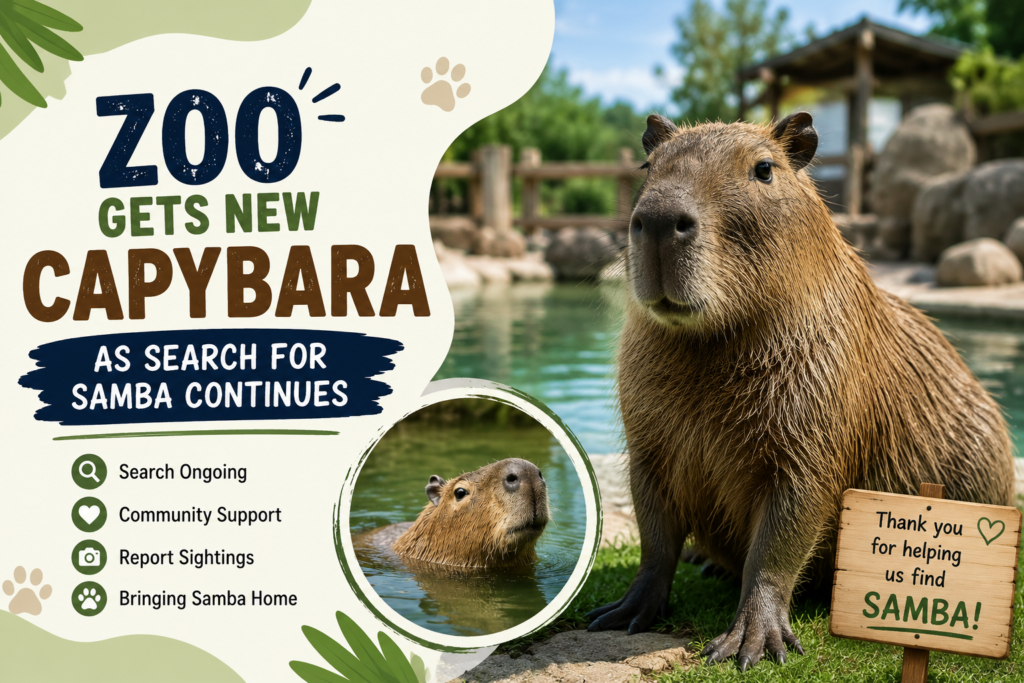
Zoo Gets New Capybara as Search for Samba Continues
- July 18, 2026
- 0
A zoo welcomes a new capybara while the search for the missing capybara, Samba, continues. Discover the latest updates, community efforts, and how the new arrival is helping
9621 Agnes Crossing, Lake Suzanneview, New Mexico Island 84604-9295.
A zoo welcomes a new capybara while the search for the missing capybara, Samba, continues. Discover the latest updates, community efforts, and how the new arrival is helping
A local zoo has welcomed an adorable new capybara while staff continue their determined search for Samba, the much-loved capybara that recently escaped from the park. The arrival of the new animal has brought a sense of excitement and hope to visitors, although zoo officials emphasize that finding Samba remains their highest priority. Capybaras, the world’s largest rodents, are known for their gentle personalities, strong social bonds, and love of water, making them one of the most popular attractions at modern zoos. Keepers explained that introducing a new companion helps maintain a healthy social environment for the remaining capybaras, as these animals naturally thrive in groups rather than living alone. Meanwhile, trained staff, local volunteers, and wildlife experts continue to search nearby parks, rivers, wooded areas, and residential neighborhoods where Samba may have wandered. Motion-sensitive cameras, food stations, and reports from the public are all being used to track the missing capybara’s movements. Zoo officials have thanked the community for its overwhelming support, with hundreds of people sharing sightings and updates across social media. While many reported sightings have turned out to be false alarms, each tip has helped narrow the search area. Animal experts remain optimistic because capybaras are generally peaceful animals that avoid confrontation and often stay close to water sources where they feel safest. Visitors have already begun meeting the zoo’s newest capybara, whose calm and friendly nature has quickly made a positive impression on families and children. Educational displays near the enclosure now explain the importance of wildlife conservation, responsible pet ownership, and the natural behaviors of capybaras in South America. The zoo hopes the story will not only lead to Samba’s safe return but also encourage greater appreciation for these remarkable semi-aquatic mammals. Until then, keepers remain committed to caring for the new arrival while continuing their around-the-clock efforts to reunite Samba with the rest of the capybara family, believing that with continued public support and patience, the missing animal will eventually be found safe and brought back home.
The arrival of a new capybara at the zoo has created excitement among visitors and animal lovers.
but the spotlight remains firmly on the ongoing search for Samba, the beloved capybara that recently disappeared from the zoo.
While the newest member of the capybara family is settling comfortably into its carefully designed habitat, zoo officials continue to devote significant resources to finding Samba and bringing the missing animal safely home. The search operation has expanded beyond the zoo grounds, with trained animal care specialists, wildlife officers, volunteers, and local authorities working together to monitor nearby rivers, ponds, parks, wooded areas, and residential neighborhoods where Samba may have traveled. Motion-activated cameras, thermal imaging equipment, food stations, and fresh tracking methods have all been deployed to improve the chances of locating the capybara. Zoo officials say that Samba’s calm nature and strong instinct to stay close to water provide valuable clues that are helping search teams narrow down potential locations. Community involvement has also played a major role in the search, with hundreds of residents reporting possible sightings, sharing photographs, and spreading awareness across social media platforms. Although many reports have proven to be false alarms, every credible tip has helped investigators eliminate search areas and focus their efforts more effectively. Meanwhile, the newly arrived capybara has quickly adapted to its surroundings, displaying the friendly, curious, and social behavior that makes the species one of the zoo’s most popular attractions. Keepers explain that capybaras are highly social mammals that naturally live in groups, making companionship essential for their emotional well-being. Introducing a new companion not only supports the remaining animals but also ensures the zoo can continue educating visitors about one of South America’s most fascinating species. Native to wetlands, rivers, and grasslands, capybaras are excellent swimmers capable of remaining underwater for several minutes to avoid predators, making water an essential part of their habitat. The zoo has also launched educational exhibits highlighting capybara conservation, habitat preservation, and the importance of protecting wildlife around the world. Families visiting the exhibit have expressed both excitement over meeting the new capybara and concern for Samba’s safe return, demonstrating the strong bond that often develops between zoo animals and their communities. Staff members remain optimistic that Samba will be found, noting that escaped capybaras have successfully been recovered in similar situations after remaining hidden for several days or even weeks. Every day, search teams continue to patrol likely locations, review surveillance footage, and respond to public reports with determination and patience. Zoo officials have thanked supporters for their encouragement, reminding the public to avoid approaching the animal if spotted and instead contact the zoo immediately so trained professionals can respond safely. Until Samba is reunited with the herd, the zoo remains committed to balancing the care of its newest resident with the ongoing rescue mission, hoping that this challenging chapter will soon end with a successful reunion and an inspiring story of teamwork, conservation, and community support.

The arrival of a new capybara has brought fresh energy and optimism to the zoo, but the search for Samba remains the story’s emotional focus. With dedicated staff, community support, and ongoing rescue efforts, there is hope that Samba will soon be found and safely reunited with the rest of the capybara family. In the meantime, the zoo continues to educate visitors about wildlife conservation and the importance of protecting animals both in captivity and in the wild. The situation serves as a reminder of the strong connection people can have with animals and how communities often come together when one of their favorite residents goes missing.