. Why Furniture Design Is Moving Toward Sustainability
The furniture industry has traditionally relied on natural timber, plastics, metals, and synthetic materials that require significant amounts of energy and natural resources to produce. Unfortunately, this has contributed to deforestation, greenhouse gas emissions, landfill waste, and pollution. As global awareness of environmental challenges continues to grow, furniture manufacturers are under increasing pressure to adopt more sustainable practices that minimize ecological impact without sacrificing quality or aesthetics.
Consumers are also changing their purchasing habits. Many homeowners now prefer furniture that is ethically sourced, recyclable, biodegradable, or made from renewable resources. Instead of replacing inexpensive furniture every few years, buyers are investing in durable pieces that last longer and have a smaller environmental footprint. This shift has encouraged manufacturers to rethink every stage of production—from sourcing raw materials to packaging and transportation.
Governments and environmental organizations are further accelerating this transition by introducing stricter sustainability standards and promoting circular economy initiatives. As a result, companies that prioritize responsible manufacturing are gaining a competitive advantage while helping protect the environment. Sustainable furniture has evolved from a niche concept into one of the fastest-growing sectors in modern interior design.
. Mushroom Leather: Nature’s Innovative Alternative
Among the most fascinating developments in sustainable furniture is mushroom leather, also known as mycelium leather. Mycelium is the root-like structure of fungi that grows rapidly under controlled conditions. When cultivated and processed, it forms a lightweight yet remarkably durable material that closely resembles traditional leather while being completely biodegradable and animal-free.
Furniture designers are increasingly using mushroom leather to upholster sofas, lounge chairs, ottomans, and decorative accessories. Unlike conventional leather production, which consumes large quantities of water and chemicals, mycelium requires significantly fewer natural resources and generates far lower carbon emissions. The production process is also considerably faster, making it an attractive option for environmentally conscious manufacturers.
Beyond its sustainability benefits, mushroom leather offers impressive design flexibility. It can be produced in various textures, colors, and thicknesses, allowing designers to create luxurious furniture without relying on animal products. As research continues to improve its durability and scalability, mycelium leather is expected to become one of the defining materials of next-generation furniture manufacturing.
Practical Example
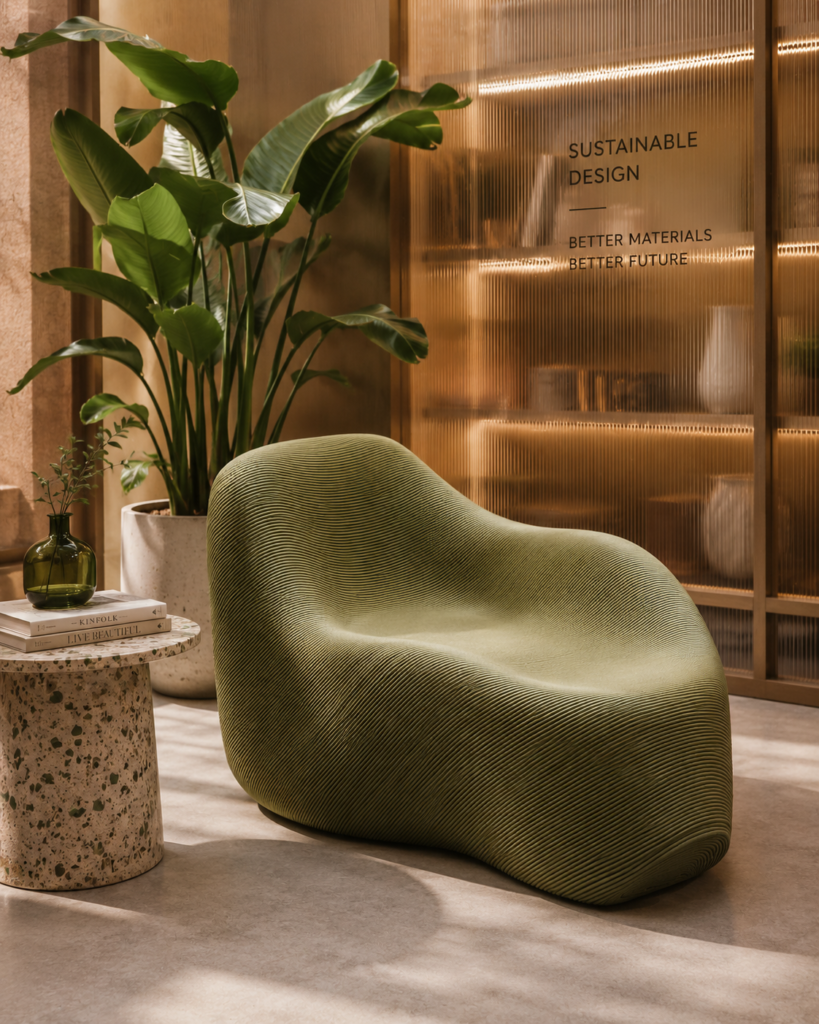
Imagine purchasing a premium lounge chair upholstered in mushroom leather instead of conventional animal leather. The chair delivers the same elegant appearance and soft texture while significantly reducing its environmental impact. At the end of its useful life, much of the material can naturally decompose instead of remaining in landfills for decades.
. Recycled Plastic Is Becoming Premium Furniture
Plastic waste has become one of the world’s most pressing environmental issues, with millions of tons entering landfills and oceans each year. Rather than viewing discarded plastic as waste, innovative furniture designers are transforming it into durable, stylish, and highly functional furniture pieces that demonstrate the value of circular manufacturing.
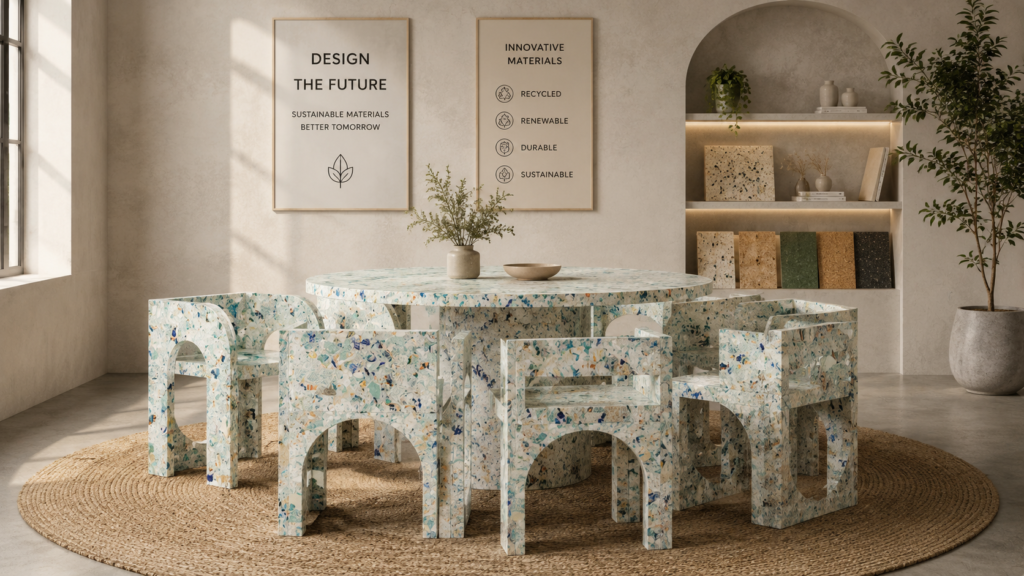
Advanced recycling technologies now allow manufacturers to convert used bottles, packaging materials, fishing nets, and industrial plastics into high-quality chairs, outdoor benches, coffee tables, storage cabinets, and decorative accessories. Modern processing techniques improve the strength and appearance of recycled plastic, making it nearly indistinguishable from newly manufactured materials.
One of the greatest advantages of recycled plastic furniture is its exceptional durability. It resists moisture, corrosion, insects, and harsh weather conditions, making it ideal for both indoor and outdoor environments. Many companies are also combining recycled plastics with 3D printing technologies to create customized furniture while minimizing production waste.
Practical Example
A public park can install benches manufactured entirely from recycled ocean plastics. These benches not only withstand years of exposure to rain and sunlight but also help remove plastic waste from marine environments, giving discarded materials a valuable second life.
. Hemp Composite: A Strong and Renewable Material
Hemp is rapidly gaining recognition as one of the most sustainable materials available for furniture production. Unlike traditional timber, hemp grows quickly, requires relatively little water, and absorbs significant amounts of carbon dioxide during cultivation. These characteristics make it an environmentally responsible alternative for manufacturers seeking renewable raw materials.
When hemp fibers are combined with plant-based resins or natural adhesives, they form durable composite panels that can replace conventional wood in many furniture applications. These composites are lightweight yet incredibly strong, making them suitable for tables, shelving systems, cabinets, desks, and modular furniture. Their natural texture also provides a distinctive aesthetic that complements contemporary interior design.
Beyond its environmental advantages, hemp contributes to healthier indoor spaces because it often requires fewer harmful chemicals during processing. As technological advancements continue to improve its performance and affordability, hemp-based furniture is expected to become increasingly common in residential and commercial interiors.